Agentic AI Mesh — Part 10 – The Future Mesh-Powered Enterprise

· 8 min read

Sanjoy Kumar Malik
Solution/Software Architect & Tech Evangelist
Agentic AI Mesh — Part 10 – The Future Mesh-Powered Enterprise

The Enterprise Is About to Change Shape

Every architectural shift in computing has reshaped organizations.

Mainframes centralized power.
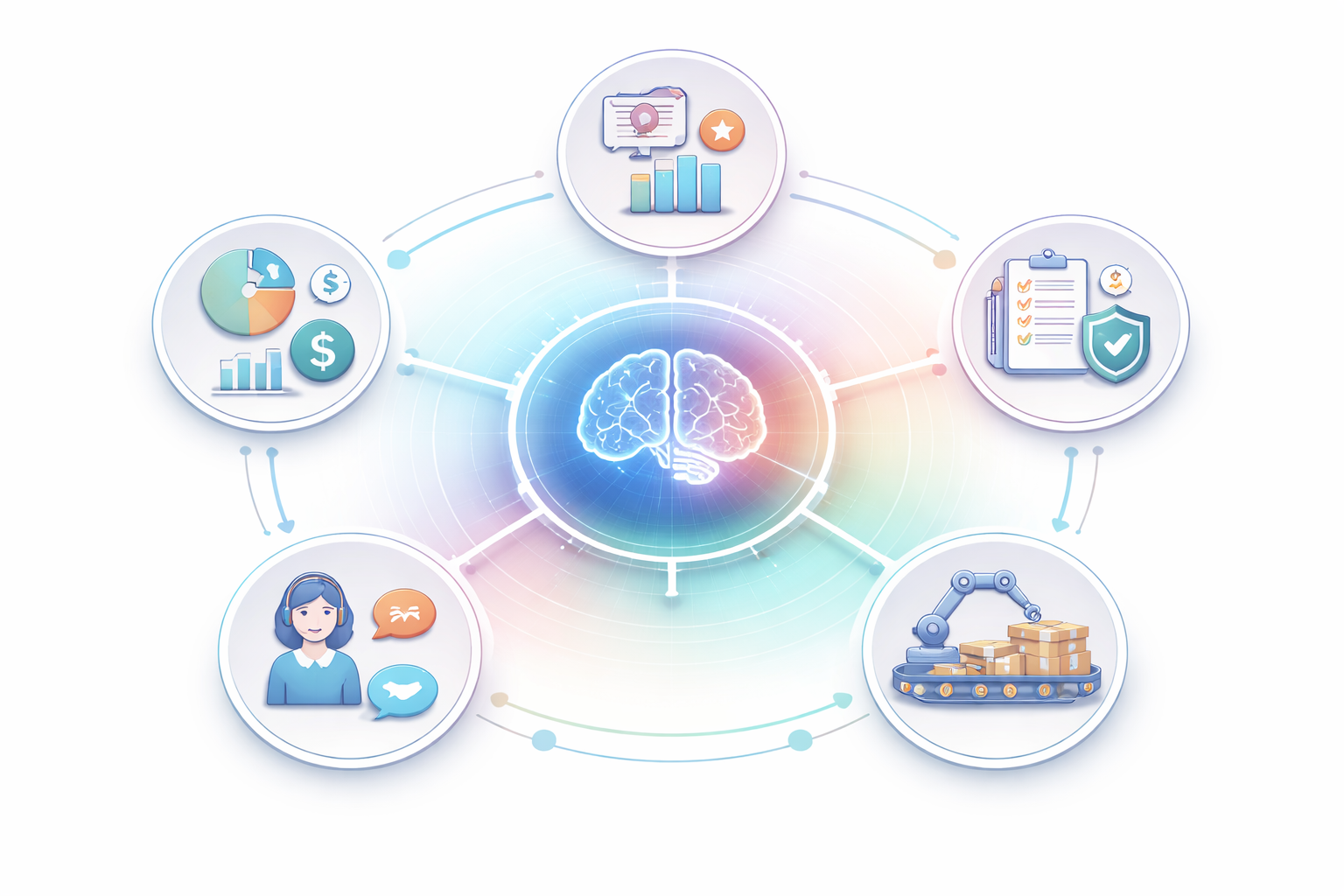
Client-server distributed access.
Cloud decentralized infrastructure.

The Agentic Mesh will redefine the enterprise itself.

Not just how systems are built.
Not just how decisions are automated.

But how authority is distributed.
How work is executed.
How leaders govern.
How strategy adapts in real time.

This Part 10 looks forward.

Not at speculative hype.
At structural inevitability.

When autonomy scales through a mesh architecture, the enterprise evolves into something fundamentally different.


Agentic AI Mesh — Part 4 – Core Design Patterns for Mesh Systems

· 9 min read
Sanjoy Kumar Malik
Solution/Software Architect & Tech Evangelist
Agentic AI Mesh — Part 4 – Core Design Patterns for Mesh Systems

Architecture Determines Autonomy

Most AI initiatives fail at scale not because models are weak — but because design is careless.

Enterprises rush into autonomy.

They deploy agents.
They connect APIs.
They experiment with multi-agent workflows.

Then coordination collapses.

Latency spikes.
Policies conflict.
Agents duplicate work.
Governance gaps appear.

The problem is not ambition.

The problem is missing design patterns.

Distributed intelligence requires structure.

In this Part 4, we define the core architectural patterns that make an Agentic Mesh scalable, governable, and resilient.

These are not abstract principles.

They are implementation blueprints.

Agentic AI Mesh — Part 5 – Secure, Governable, and Trustworthy Mesh Operations

· 10 min read
Sanjoy Kumar Malik
Solution/Software Architect & Tech Evangelist
Agentic AI Mesh — Part 5 – Secure, Governable, and Trustworthy Mesh Operations

Autonomy Without Trust Is Dead on Arrival

Every executive conversation about AI autonomy eventually converges on one question:

Can we trust it?

Not just trust the model.

Trust the system.

Trust the interactions.

Trust the boundaries.

Trust the governance.

You can build the most elegant Agentic Mesh in the world.
If leadership does not trust it, it will never scale.

Security teams will block it.
Compliance teams will slow it.
Risk teams will constrain it.

Trust is not a soft concept.

It is an architectural outcome.

In this Part 5, we define how to design secure, governable, and trustworthy mesh operations without suffocating autonomy.

Agentic AI Mesh — Part 6 – Data Integration, Real-Time Streams & Event-Driven Orchestration

· 10 min read
Sanjoy Kumar Malik
Solution/Software Architect & Tech Evangelist
Agentic AI Mesh — Part 6 – Data Integration, Real-Time Streams & Event-Driven Orchestration

Autonomy Is Only as Intelligent as Its Data

An agent without context is guessing.

An agent with stale data is dangerous.

An agent with fragmented signals is inconsistent.

If Part 5 established trust as the backbone of autonomy, this part defines its bloodstream.

Data flow is the lifeblood of the Agentic Mesh.

Not static reports.
Not nightly batch jobs.
Not isolated dashboards.

Real-time, validated, distributed signals.

Autonomous systems do not poll databases every hour.

They react to state changes instantly.

If your enterprise data architecture was built for reporting, it is not ready for autonomy.

This Part 6 explains how to architect data integration and event-driven orchestration to support scalable mesh intelligence.

Agentic AI Mesh — Part 7 – Mesh Operationalization & Lifecycle Management

· 9 min read
Sanjoy Kumar Malik
Solution/Software Architect & Tech Evangelist
Agentic AI Mesh — Part 7 – Mesh Operationalization & Lifecycle Management

Introduction

Designing an Agentic Mesh is intellectually satisfying.

Operating one is unforgiving.

In development environments, agents appear elegant.

In production, they face:

  • Load spikes
  • Data anomalies
  • Model drift
  • Policy updates
  • Security threats
  • Organizational scrutiny

This is where most autonomy initiatives fail.

Not at architecture.
At operationalization.

If the mesh cannot be deployed safely, versioned predictably, monitored continuously, and evolved systematically, it will be constrained by risk teams and scaled back by executives.

This Part 7 defines the operational discipline required to run autonomous mesh systems in real enterprise environments.

Autonomy must be engineered instead of just designed.

Agentic AI Mesh — Part 8 – Cross-Functional Workflows & Business Value

· 9 min read
Sanjoy Kumar Malik
Solution/Software Architect & Tech Evangelist
Agentic AI Mesh — Part 8 – Cross-Functional Workflows & Business Value

Autonomy Must Translate Into Outcomes

Architecture does not create value.

Dashboards do not create value.

Even intelligent agents do not create value unless they move business metrics.

Revenue.
Margin.
Risk exposure.
Cycle time.
Customer retention.
Innovation velocity.

If the Agentic Mesh does not change these numbers, it is an experiment.

This Part 8 moves from infrastructure to impact.

We will examine how cross-functional agent collaboration transforms real enterprise workflows instead of isolated tasks.

Autonomy becomes strategic when it coordinates across silos.

Agentic AI Mesh — Part 9 – Mesh Interoperability & Vendor Agnosticism

· 9 min read
Sanjoy Kumar Malik
Solution/Software Architect & Tech Evangelist
Agentic AI Mesh — Part 9 – Mesh Interoperability & Vendor Agnosticism

Autonomy Dies in a Closed Ecosystem

Enterprises rarely fail because they choose the wrong vendor.

They fail because they become structurally dependent on one.

AI ecosystems evolve faster than any procurement cycle.

Models improve quarterly.
Infrastructure capabilities shift annually.
Regulations reshape architectures unexpectedly.

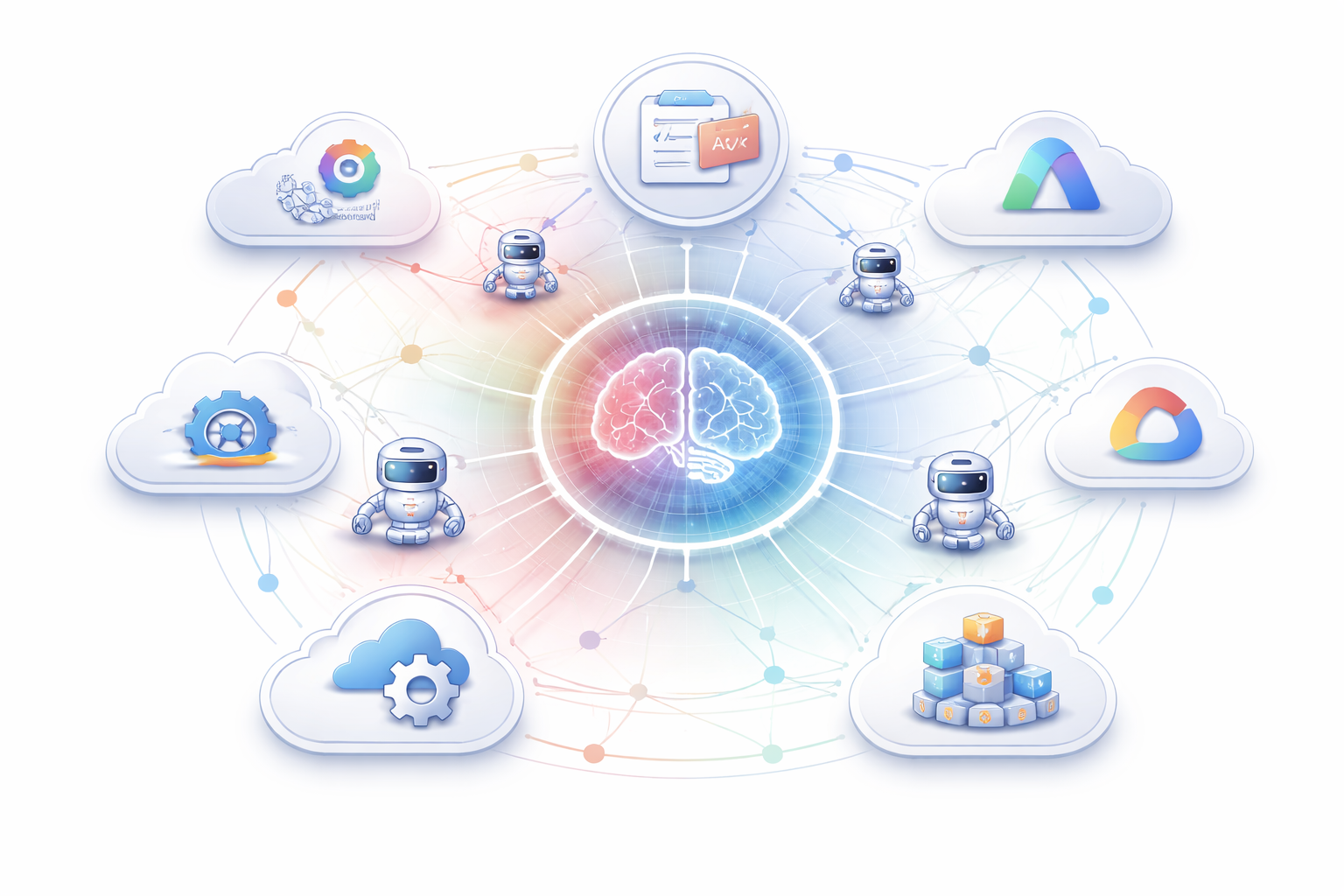
If your Agentic Mesh depends on a single model provider, a single cloud stack, or a single orchestration platform, your autonomy is temporary.

Vendor lock-in is not a procurement issue.

It is an architectural weakness.

This Part 9 defines how to design interoperability and vendor-agnostic mesh systems that preserve strategic flexibility without sacrificing performance.

Autonomy requires freedom.

Agentic AI Mesh — Part 1 – The AI Scaling Paradox

· 9 min read
Sanjoy Kumar Malik
Solution/Software Architect & Tech Evangelist
Agentic AI Mesh — Part 1 – The AI Scaling Paradox

The Illusion of Progress

Every enterprise claims it is “doing AI.”

Dashboards glow with predictive models.
Chatbots respond in seconds.
Executives reference large language models in earnings calls.

And yet, inside most organizations, AI impact remains fragmented.

Revenue lift is modest.
Operational efficiency gains plateau.
Risk teams are uneasy.
Technology teams are exhausted.

This is the AI Scaling Paradox:

The more AI pilots an enterprise launches, the harder it becomes to scale meaningful, governed, enterprise-wide autonomy.

AI adoption is accelerating.
Enterprise value is not.

The paradox is not about model accuracy.
It is not about compute power.
It is not about access to foundation models.

It is architectural.

This article explains why AI initiatives stall, why scaling breaks down, and why autonomy requires a new structural foundation — one that most enterprises have not yet built.

1. The Pilot Trap — Why AI Success Stalls at Scale

Agentic AI Mesh — Part 2 – From Monolithic Systems to Agentic Autonomy

· 9 min read
Sanjoy Kumar Malik
Solution/Software Architect & Tech Evangelist
Agentic AI Mesh — Part 2 – From Monolithic Systems to Agentic Autonomy

The Architecture Shift No One Talks About

Every major technological leap forces a structural rewrite.

Mainframes gave way to client-server.
Monoliths gave way to microservices.
On-premises gave way to cloud-native.

Now AI is forcing the next shift.

But many enterprises are attempting to run agentic intelligence on monolithic thinking.

They embed large language models into existing applications.
They wrap models with APIs.
They bolt orchestration on top of workflows.

It works until it doesn’t.

Because autonomy cannot thrive inside rigid structures.

This part explains the structural evolution from monolithic systems to agentic autonomy. Not conceptually. Architecturally.

If Part 1 diagnosed the scaling paradox, this part explains why it exists.

Agentic AI Mesh — Part 3 – The Agentic Mesh Defined

· 10 min read
Sanjoy Kumar Malik
Solution/Software Architect & Tech Evangelist
Agentic AI Mesh — Part 3 – The Agentic Mesh Defined

The Missing Layer in Enterprise AI

Enterprises have models.
They have APIs.
They have data lakes.
They have orchestration engines.

Yet they do not have collective intelligence.

Why?

Because something fundamental is missing.

Not another model.
Not more compute.
Not another orchestration tool.

What’s missing is a coordination fabrica structural layer that allows autonomous agents to discover each other, communicate securely, share context, and operate under shared governance.

That layer is the Agentic Mesh.

If Part 1 exposed the scaling paradox, and Part 2 clarified what autonomy means, this Part 3 defines the structural foundation required to make autonomy scale.

The Agentic Mesh is not a tool.
It is not a product category.
It is an architectural paradigm.

Let us define it precisely.