Event-Driven Architecture in Agentic AI System Design

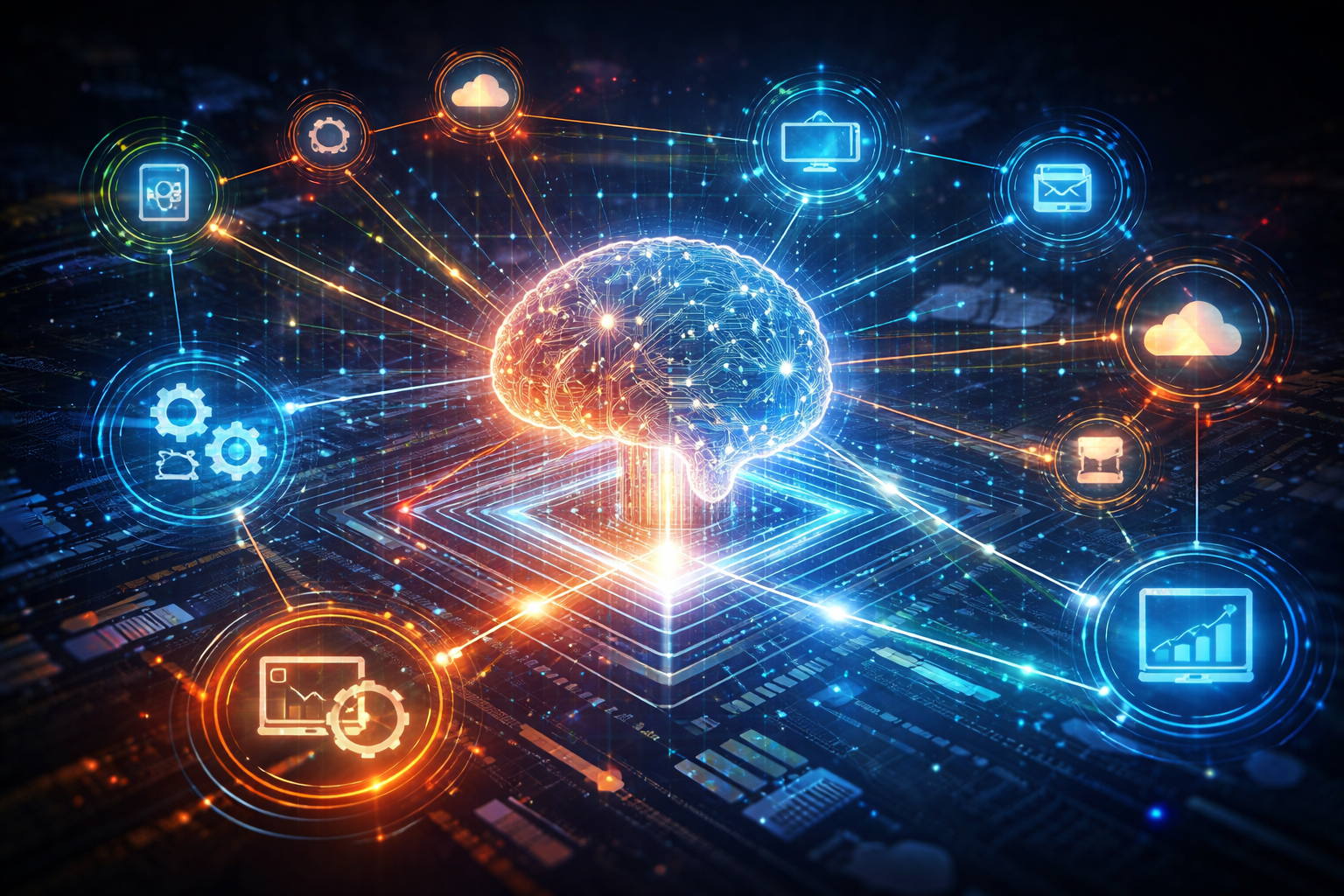
Agentic Artificial Intelligence (AI) represents a shift from static, model-centric deployments toward autonomous, goal-oriented software agents capable of sensing, deciding, and acting in real time. Unlike traditional request–response service patterns, agentic AI components must continuously process signals from their environment, plan actions, and collaborate with other agents and services. Event-Driven Architecture (EDA) has emerged as the foundational system design paradigm to enable this next generation of agentic systems. EDA provides the asynchronous, decoupled, scalable foundations required for real-time responsiveness, modular extensibility, and resilient operations. This article explains why, how, and where EDA is applied in agentic AI design, anchored in current trends and practical implementation insights.
Why Event-Driven Architecture Is Core to Agentic AI
At its core, event-driven architecture treats state changes and business signals as first-class stimuli that drive system behavior. In EDA, producers emit events (such as a sensor reading, business transaction, or AI inference result), and consumers (services, agents, workflows) react asynchronously based on their subscriptions to those events. This differs markedly from traditional synchronous APIs and scheduled batch processes. The benefits of EDA translate directly into requirements for agentic AI:
-
Asynchronous Real-Time Responsiveness: Agents must react instantly to changes in their context — market shifts, operational state changes, or sensor input — without blocking on synchronous calls. EDA’s asynchronous model enables this continuous reactivity.
-
Loose Coupling and Modularity: Coupling through events (rather than direct calls) decouples components. Agents and services can evolve independently, share event streams, and avoid brittle point-to-point integrations.
-
Scalability and Resilience: Event platforms (such as Kafka, Pulsar, or cloud-native event buses) ensure high throughput and fault isolation. If a downstream agent fails, others continue processing — a critical property for complex, distributed AI systems.
-
Audit, Replay, and Observability: A persistent event log provides an immutable record of actions and decisions — essential for debugging, compliance, governance, and continuous improvement in AI behavior.
These characteristics align directly with agentic AI’s need to function as autonomous, continuously operating entities rather than transient functions invoked on demand.
EDA as the Nervous System of Agentic AI
If the AI models (e.g., LLMs, planners, decision modules) are the “brain” of an agentic system, then EDA is its “nervous system”: the substrate that delivers sensory input, orchestrates decisions, and propagates actions.
Event Streams as Shared Reality
In an agent ecosystem, the event stream becomes the canonical representation of state changes that matter. Events might include:
- Business activities: order placed, payment received, inventory updated.
- AI inferences: classification results, risk scores, anomaly detections.
- System signals: service health notifications, metric thresholds crossed.
Each agent subscribes to relevant event channels and emits new events based on its logic. This shared event fabric allows agents to operate independently while maintaining a coherent view of system state.
Decoupling Agents from Specific Interfaces
Traditional AI systems bind agent communication to synchronous protocols and endpoint contracts. EDA replaces this with a publish–subscribe model: agents publish what they learn and subscribe to what they need, reducing coupling and simplifying evolution.
Real-Time Feedback Loops and Context Updates
Agents function in continuous feedback loops — observe, decide, act — much like a control system. Event streams deliver context incrementally, allowing agents to recompute and adapt decisions as new information arrives. This capability is essential for mission-critical applications from dynamic pricing to automated supply chain orchestration.
Notes on Architectural Constructs for Agentic EDA
Implementing EDA for agentic AI involves several architectural constructs:
Event Producers, Brokers, and Consumers
- Producers emit events upon changes (data sources, sensors, AI models).
- Event Brokers (e.g., Kafka, Pulsar, cloud event services) persist and route events.
- Consumers/Agents react to events and may emit additional events.
Consumer-Producers (Chaining of Logic)
Many agentic workflows involve components that consume and subsequently emit events — effectively chaining reactions or orchestrating multi-step reasoning chains.
Event Store for Persistent History
A persistent event store ensures all events are durable, replayable, and available for retrospective analysis. This is particularly useful for evaluating agent decisions and diagnosing complex behavior.
Model Context Protocol (MCP) Integration
Emerging patterns combine EDA with structured context protocols like MCP to standardize how agents access and update shared context, reducing ambiguity and enabling safer, auditable AI behavior.
Trends Shaping Event-Driven Agentic AI
Several important trends are influencing how EDA is applied in agentic AI system design:
Convergence of EDA with Real-Time AI Inference
Platforms now enable real-time model inference directly on event streams (e.g., integrating Apache Flink with LLMs), allowing decisions to be made continuously against live data without explicit batching.
Serverless Architectures and Edge Processing
Serverless event functions and edge computing are extending EDA beyond centralized data centers to distributed environments, reducing latency and operational overhead for localized intelligent behavior.
Security and Governance Imperatives
As autonomous agents act on behalf of business processes, zero trust, immutable event logs, and authentication/authorization for event streams become non-negotiable design requirements.
Practical Implementation Considerations
When designing an agentic AI system with EDA in practice, architects should:
-
Define Clear Event Contracts: Standardized schemas and versioning prevent misunderstandings between consumers and producers.
-
Select Appropriate Brokers: Choose messaging backbones (Kafka, Pulsar, cloud event services) that meet throughput, retention, and delivery semantics requirements for your domain.
-
Invest in Observability: Logging, metrics, and tracing across event flows are critical for diagnosing complex, distributed agent behavior.
-
Manage Operational Complexity: EDA introduces operational burden; invest early in tooling, monitoring, and schema governance to avoid scaling pain.
Conclusion
Event-Driven Architecture is not merely a pattern but a strategic imperative for designing effective, scalable, and resilient agentic AI systems. By treating state changes as first-class signals, decoupling logic into autonomous agents, and enabling continuous feedback loops through event streams, organizations can build systems that adapt, scale, and operate in real time. As trends in serverless deployment, edge computing, and secure event logging mature, EDA will only grow in prominence as the foundation upon which next-generation intelligent systems are built.
Disclaimer: This post provides general information and is not tailored to any specific individual or entity. It includes only publicly available information for general awareness purposes. Do not warrant that this post is free from errors or omissions. Views are personal.