5 posts tagged with "Architecture"

View All Tags

Architecture-wise Classification of Agentic AI Systems

· 11 min read
Sanjoy Kumar Malik
Solution/Software Architect & Tech Evangelist
Architecture-wise Classification of Agentic AI Systems

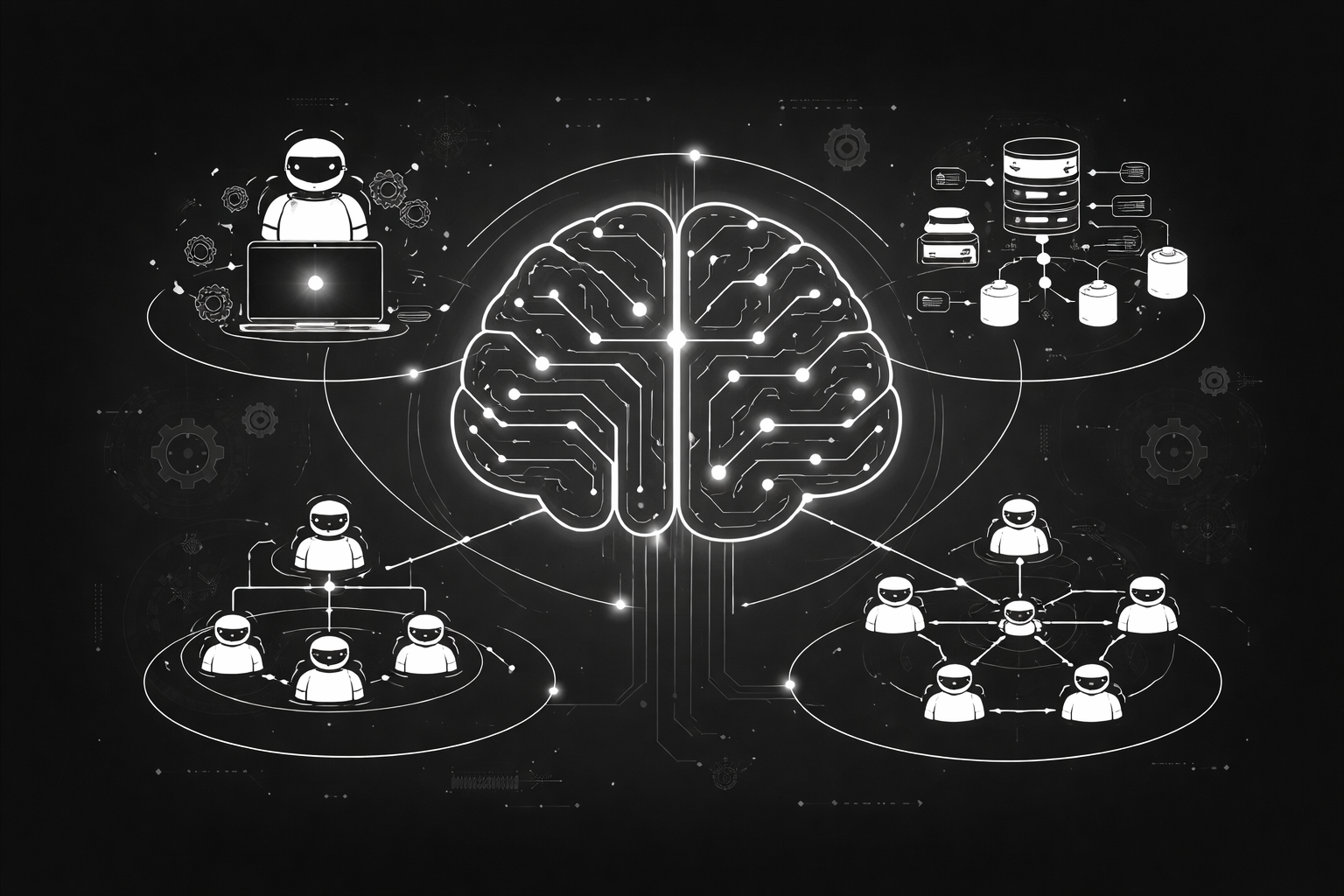
Agentic AI systems represent an evolution beyond traditional AI models by incorporating autonomy, goal-directed behaviour, and decision-making into software agents that can operate independently in dynamic environments. Unlike classical AI systems that respond to inputs with predictions or classifications, agentic AI systems synthesize perception, planning, memory, and execution to pursue complex goals with minimal human intervention. The architectural design of these systems directly influences their capabilities, scalability, and robustness. This article articulates a practical classification of agentic AI systems from an architectural standpoint, drawing on academic research and industry insights.

Single-Agent Architecture

Single-agent architecture involves a solitary autonomous AI agent that perceives its environment, reasons about tasks, plans actions, and executes decisions end-to-end.

Architectural Characteristics

  • Centralized Control: A single reasoning unit handles the full sense-plan-act cycle.
  • Simple Workflows: Ideal for tasks with limited complexity or constrained goal scope.
  • Direct Decision Logic: Plans and executes locally without networked collaboration.

Strengths and Limitations

  • Strengths: Easier to design and validate; requires fewer components and fewer coordination protocols.
  • Limitations: Less scalable for tasks requiring specialized reasoning or parallel execution.

Use Cases

  • Automated assistants programmed for specific tasks (e.g., single workflow document processing).
  • Rule-based scheduling or single-stage task execution.

Multi-Agent Architectures

3 Important Layers of AI Stack - Infrastructure, Models, and Applications

· 12 min read
Sanjoy Kumar Malik
Solution/Software Architect & Tech Evangelist
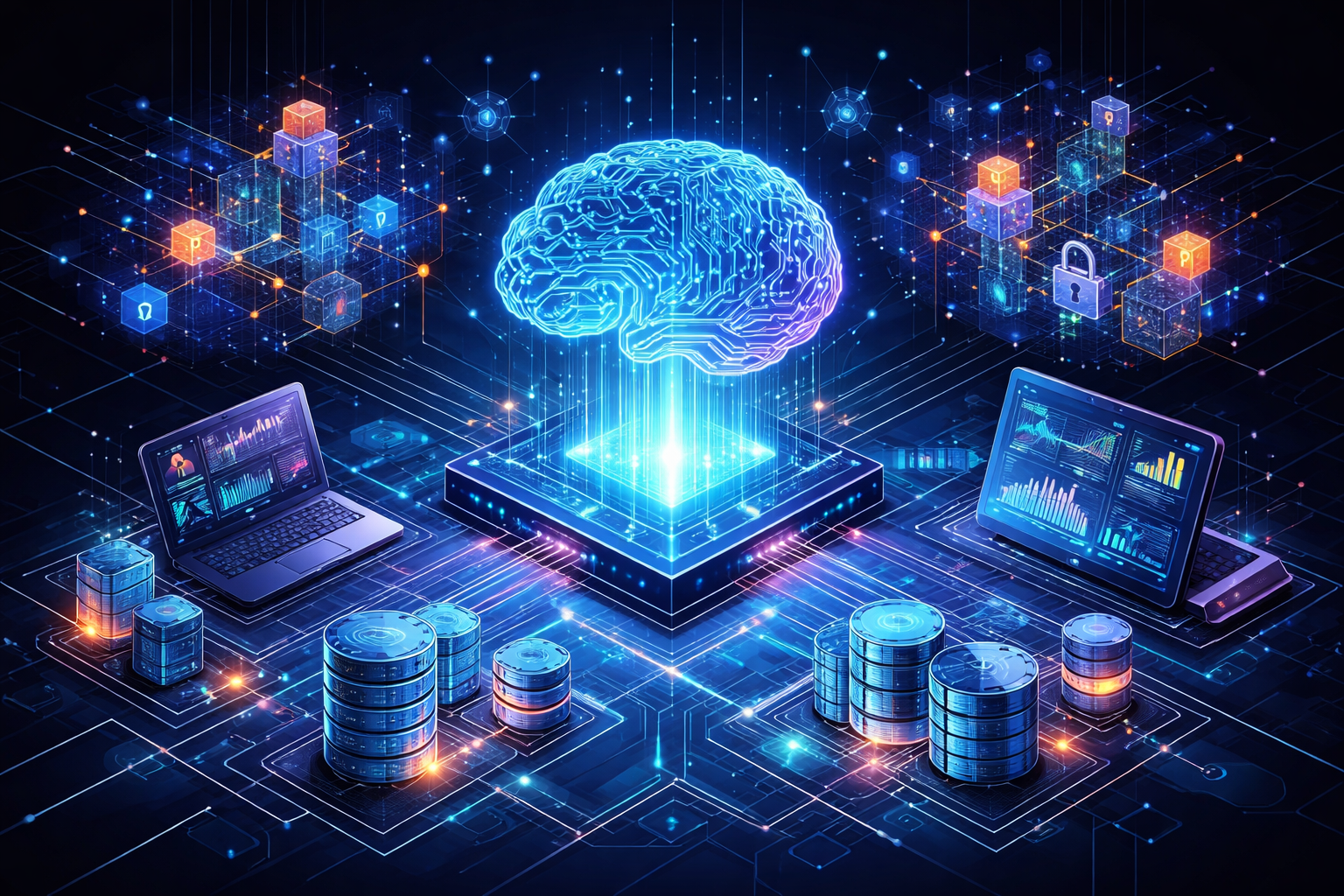
3 Important Layers of AI Stack: Infrastructure, Models, and Applications

Structuring AI as a layered AI Stack helps technology leaders, architects, and engineering teams design, build, optimize, and govern AI systems methodically.

This article unpacks the three primary layers of an AI stack — Infrastructure, Models, and Applications — and places them in context with emerging best practices in AI engineering.

Infrastructure Layer: The Foundation

At the lowest level, the infrastructure layer provides the computational foundation that powers all AI operations. Without this foundational layer, model training, inference, and deployment would not be feasible.

Key Components

Hardware and Compute

Specialized processing units (GPUs, TPUs, FPGAs) deliver high-throughput compute for both training and inference workloads. These accelerators are orders of magnitude more efficient than general-purpose CPUs for matrix and tensor operations typical in deep learning.

Cloud & On-Prem Platforms

Infrastructure can be hosted on public cloud platforms (AWS/GCP/Azure), hybrid clouds, or on-premises clusters. Cloud providers offer elasticity for scaling AI workloads, while edge and on-device compute can power latency-sensitive use cases.

Storage and Data Management

Massive training datasets must be stored, versioned, and efficiently accessed. Systems such as data lakes, object stores, and feature stores play a vital role in enabling high-performance AI pipelines.

AI-Enabled Systems and Software Architecture

· 12 min read
Sanjoy Kumar Malik
Solution/Software Architect & Tech Evangelist
AI-Enabled Systems and Software Architecture

Introduction

Designing AI-enabled systems is not a matter of selecting an algorithm and deploying a model. It is an architectural exercise that sits at the intersection of technology choices, business objectives, regulatory constraints, data realities, and operational risk. Designing for AI requires balancing these five competing forces. Ignoring one usually leads to technical debt or, worse, ethical and operational failure.

Data Realities vs. Business Objectives:

Traditional architecture assumes data is a static resource to be stored and retrieved. In AI-enabled systems, data is code.

  • Lineage & Provenance: You must track not just where data came from, but which version of the data trained which version of the model.
  • Data Gravity: Moving massive datasets to compute resources is often less efficient than moving compute to the data.

Probabilistic Behavior & Operational Risk:

In a financial or healthcare context, a 95% accuracy rate sounds high—until you realize that 5% represents thousands of incorrect medical diagnoses or failed transactions.

  • Guardrails: Architects must implement deterministic "wrappers" around probabilistic cores to catch out-of-bounds outputs.
  • Graceful Degradation: What happens when the model is uncertain? The system should revert to a rules-based heuristic rather than failing.

Event-Driven Architecture in Agentic AI System Design

· 6 min read
Sanjoy Kumar Malik
Solution/Software Architect & Tech Evangelist
Event-Driven Architecture in Agentic AI System Design

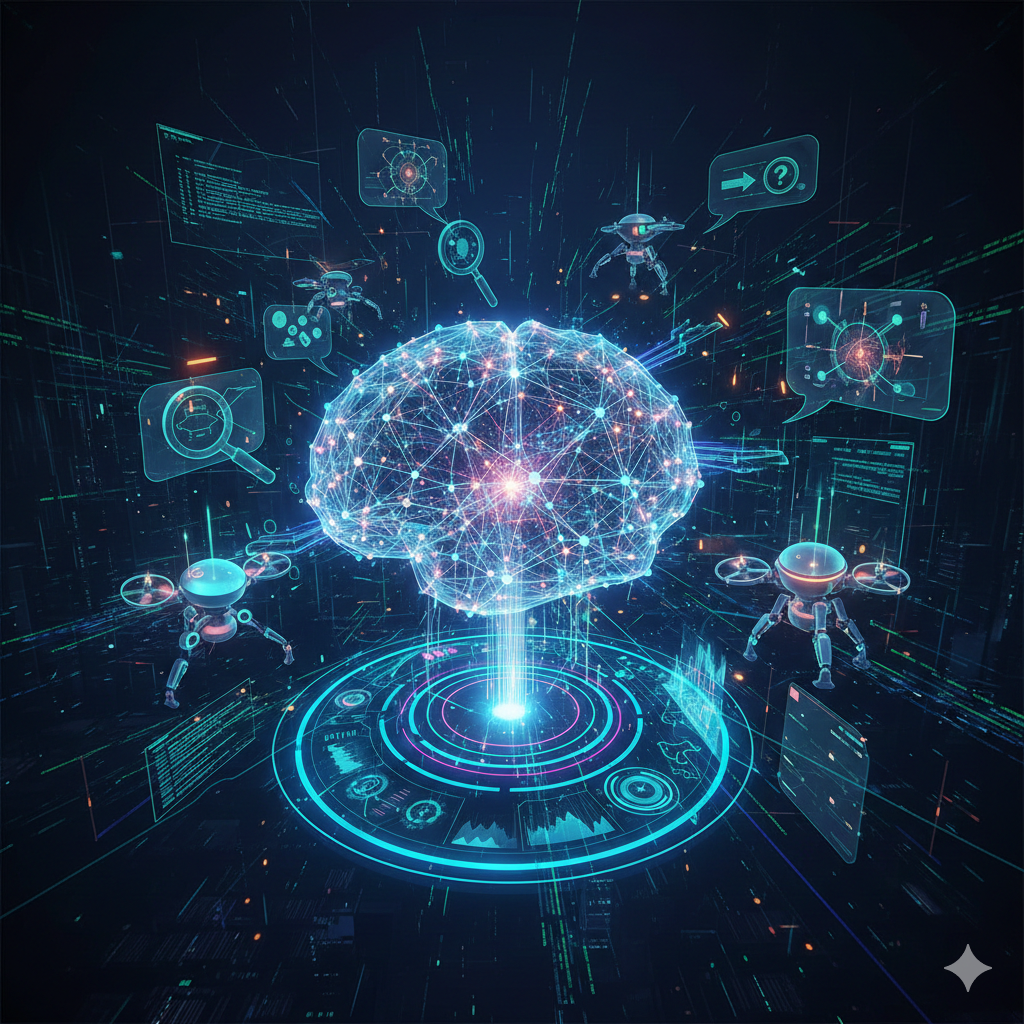
Agentic Artificial Intelligence (AI) represents a shift from static, model-centric deployments toward autonomous, goal-oriented software agents capable of sensing, deciding, and acting in real time. Unlike traditional request–response service patterns, agentic AI components must continuously process signals from their environment, plan actions, and collaborate with other agents and services. Event-Driven Architecture (EDA) has emerged as the foundational system design paradigm to enable this next generation of agentic systems. EDA provides the asynchronous, decoupled, scalable foundations required for real-time responsiveness, modular extensibility, and resilient operations. This article explains why, how, and where EDA is applied in agentic AI design, anchored in current trends and practical implementation insights.

Observability and Explainability in Agentic AI Systems

· 6 min read
Sanjoy Kumar Malik
Solution/Software Architect & Tech Evangelist
Observability and Explainability in Agentic AI Systems

Executive Context: Why This Topic Matters Now

Agentic AI systems do not merely predict or recommend. They perceive, decide, and act across time. They operate as semi-autonomous participants in production systems, business workflows, and operational decision loops.

For a CTO or System Architect, this creates a non-negotiable architectural requirement:

If you cannot observe and explain an agent’s behavior, you cannot govern it—and therefore cannot scale it responsibly.

Traditional observability practices were designed for deterministic software and stateless automation. Agentic systems violate those assumptions:

  • They pursue goals, not just instructions
  • They reason under uncertainty
  • They evolve behavior through feedback
  • They operate across multiple decision horizons

Observability and explainability are therefore not compliance checkboxes. They are control surfaces for leadership.