Architecture-wise Classification of Agentic AI Systems

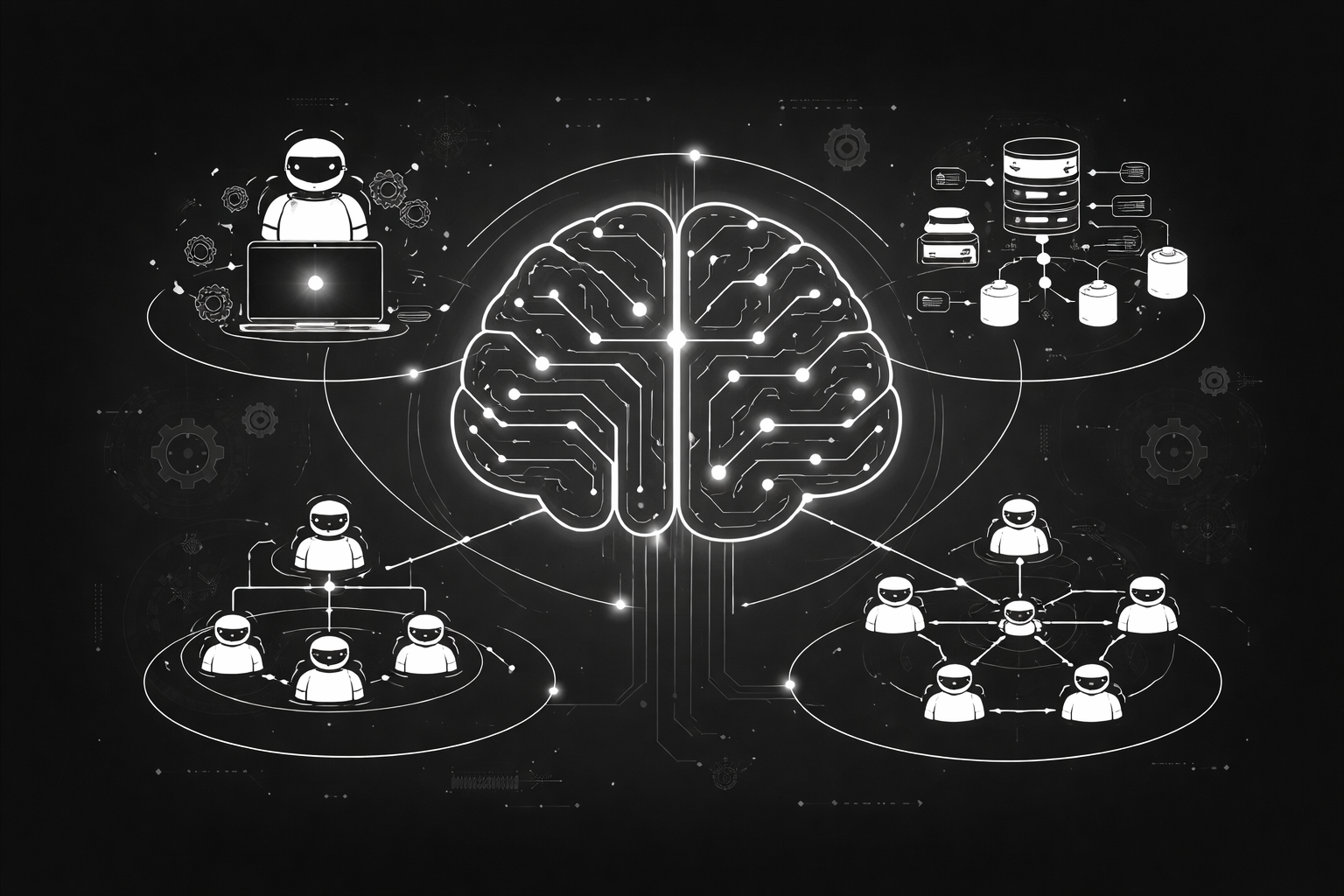
Agentic AI systems represent an evolution beyond traditional AI models by incorporating autonomy, goal-directed behaviour, and decision-making into software agents that can operate independently in dynamic environments. Unlike classical AI systems that respond to inputs with predictions or classifications, agentic AI systems synthesize perception, planning, memory, and execution to pursue complex goals with minimal human intervention. The architectural design of these systems directly influences their capabilities, scalability, and robustness. This article articulates a practical classification of agentic AI systems from an architectural standpoint, drawing on academic research and industry insights.
Single-Agent Architecture
Single-agent architecture involves a solitary autonomous AI agent that perceives its environment, reasons about tasks, plans actions, and executes decisions end-to-end.
Architectural Characteristics
- Centralized Control: A single reasoning unit handles the full sense-plan-act cycle.
- Simple Workflows: Ideal for tasks with limited complexity or constrained goal scope.
- Direct Decision Logic: Plans and executes locally without networked collaboration.
Strengths and Limitations
- Strengths: Easier to design and validate; requires fewer components and fewer coordination protocols.
- Limitations: Less scalable for tasks requiring specialized reasoning or parallel execution.
Use Cases
- Automated assistants programmed for specific tasks (e.g., single workflow document processing).
- Rule-based scheduling or single-stage task execution.